Reverse engineering
By working from existing parts and requirements, we help produce accurate replacements and support ongoing serviceability.
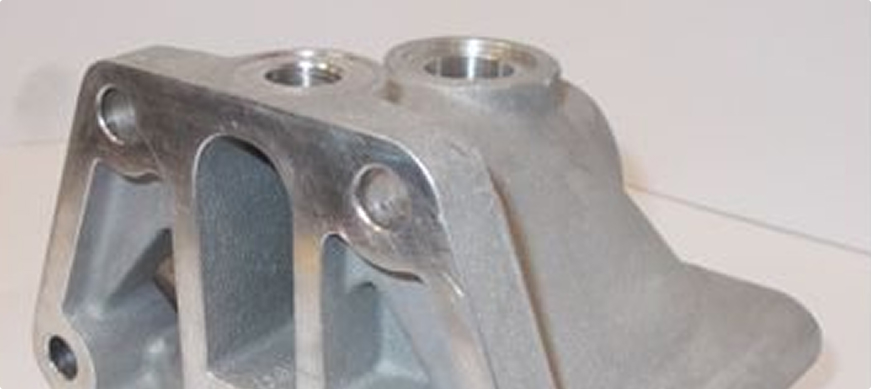
Maycast-Nokes can recreate legacy parts, combining laser scanning and 3D printing with our precision sand and investment casting processes. It is becoming increasingly difficult to source accurate, mechanically sound components for older aircraft and road going vehicles.
As the UK’s most versatile aerospace foundry we use our state-of-the-art facilities and AS9100 approved processes to offer a range of services for most types of casting related reverse engineering; from a CAD model creation to fully finished, machined castings.
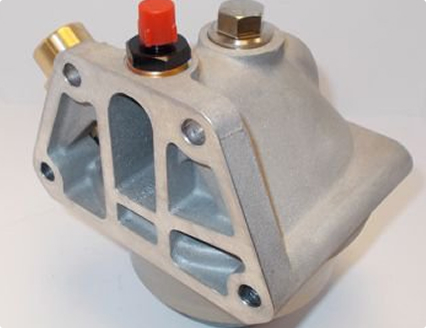
Investment casting
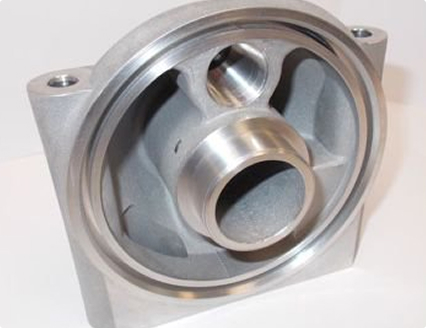
Maycast-Nokes offers a similar reverse engineering process using investment casting in place of precision sand casting. Investment casting is ideal for intricate, complicated components (often with thin wall sections). Our investment foundry is equipped with pressure and vacuum casting chambers for optimal casting conditions.
Typically we use Polymethyl Methacrylate (PMMA) 3D printed ‘patterns’ which are then treated in the same way as regular investment waxes. Learn more about our reverse engineering service.
Reverse engineering frequently asked questions
Questions about our reverse engineering service, including part recreation and support for legacy components.
-
Reverse engineering is the process of taking an existing product or component, and working backwards to determine how it was designed, manufactured, or functions.
Instead of starting with a design and creating a product, you start with the finished product and recreate the design.
Often, reverse engineering is considered when original drawings or CAD files are unavailable. By measuring and analysing an existing part, we can reproduce key dimensions and features to support remanufacture, replacement or design improvement, helping keep equipment running reliably.
-
Yes, but we would need a sample part to work with. We would then scan the part to create a CAD model, add casting allowances, gating and feeding systems, thus allowing us to manufacture new parts in a fraction of the traditional lead time.
-
Absolutely, reverse engineering can identify opportunities for design improvement and at the same time reduce development lead time for replacement components. However, Engineers must be careful not to inadvertently copy worn, damaged or distorted geometry from the original sample.
-
Our Engineering team uses SolidWorks, an industry-standard, desktop-based 3D computer-aided design (CAD) and computer-aided engineering (CAE) software package developed by Dassault Systems. It is primarily used to plan, model, simulate, and document physical products before they are manufactured.
SolidWorks uses proprietary native file formats to store design data, parametric features, sketches, and material properties. The three primary native file types are: Part File (.sldprt) which contains a single 3D model with its full feature history, sketches, and dimensions. An assembly File (.sldasm) which stores the relationships and positions of multiple parts that fit together to form a complete product. And a drawing File (.slddrw): A 2D documentation print layout directly linked to your 3D parts or assemblies.
SolidWorks also supports a wide array of import and export file types: Neutral CAD Formats: STEP (.stp or .step), IGES (.igs), and Parasolid (.x_t) are the best universal choices for sharing editable data across different software
Explore more of our services
-

Quality assurance
Read more about how we maintain quality control and inspection procedures.
Learn more -

Meet the team
Learn more about the people behind Maycast Nokes and the roles they lead.
View our team