Rapid prototyping
3D printing can be used to produce patterns, prototypes and development components, helping customers progress from concept through to production with greater confidence.
Precision sand casting
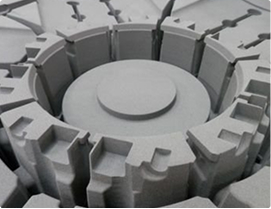
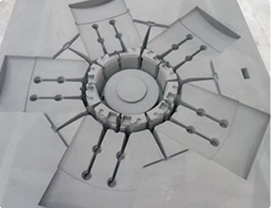
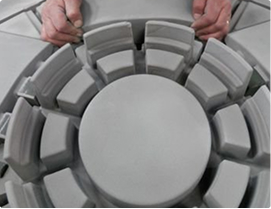
3D sand printing offers a number of key advantages over traditional pattern based sand casting. Printed moulds do away with the need for traditional patterns, allowing designers a far greater degree of design freedom without the need for expensive and time consuming adaptations to patterns and core boxes. The process also offers significant reductions in lead times over normal sand casting processes.
Ideal for low volume production runs and development work, printed moulds are also suitable for reverse engineering applications such as the reproduction of vintage or legacy components where only an original casting might exist. Our engineering team are able to create an accurate digital 3D model from scan data which can then be used to produce an identical casting. We offer a variety of surface finishes to suit.
Investment casting
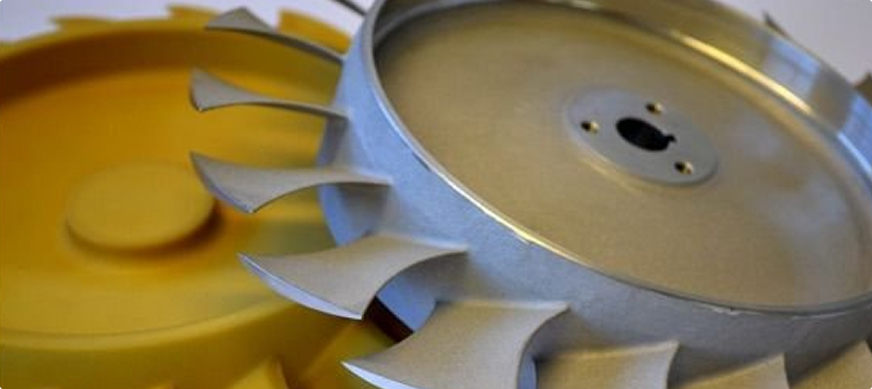
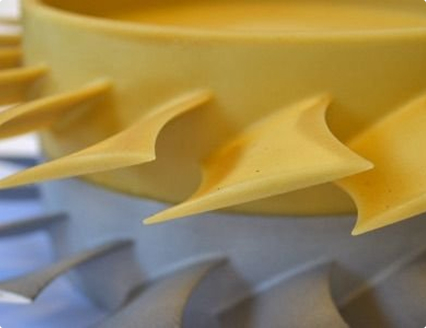
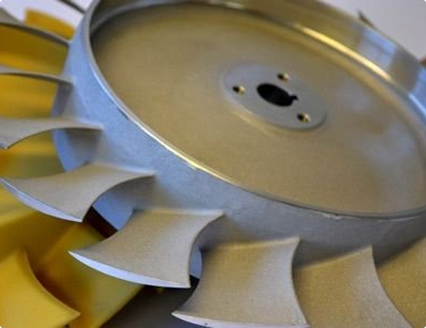
Maycast-Nokes has many years’ experience of aluminium casting using 3D rapid prototypes. 3D digital CAD models are used to print ‘rapids’ which are then processed using the same manufacturing process as normal investment waxes.
As with our 3D printed sand moulds this service is ideal for low volume production or in situations where development work is ongoing and design changes are liable to occur. In such situations changes can be accommodated at short notice.
Polymethyl Methacrylate (PMMA) models offer a high degree of accuracy (± 0.4%); wax infiltration creates a smooth finish as well as the usual advantages associated with investment casting (thin wall sections, complexity).
Typically we use Polymethyl Methacrylate (PMMA) 3D printed ‘patterns’ which are then treated in the same way as regular investment waxes. Learn more about our rapid prototyping service.
Rapid prototyping frequently asked questions
Common questions about prototyping support, helping validate designs and reduce risk before tooling and production.
-
Rapid prototyping helps validate part design and fit before full production begins. It enables early testing and refinement, reducing risk and speeding up development. We support prototype requirements as part of a wider manufacturing process, from concept through to casting and machining.
-
Yes, while a one-off prototype casting may cost several times more than a production casting, it can eliminate the risk of tooling rework, programme delays, and qualification failures later in the project. As a result, prototype castings are often the lowest-cost option when considering total programme cost rather than piece price alone.
-
Lead times will always be part and process specific, and need to be considered along with our operating capacity and the capacity of our sub-contractors.
-
The prototype will represent the intended casting geometry and may include process-specific build lines dependant on the method of manufacture of the pattern or the mould. As a result, dimensions may differ marginally from the final finished component.
-
Yes, in many instances that’s the whole point. Rapid prototyping allows us to by-pass the tooling stage, cutting out several weeks lead-time to provide a quick route to production. It also allows customers the flexibility to carry-out re-design of the part without the expense of modifying a tool to do so. In some instances rapid prototyping techniques are used for low volume manufacture on an ongoing basis.
Explore more of our services
-

Quality assurance
Read more about how we maintain quality control and inspection procedures.
Learn more -

Meet the team
Learn more about the people behind Maycast Nokes and the roles they lead.
View our team